In Part 2 of this Black Paris Profile on Leonardo ("Nardy") Castellini, Nardy discusses the places that he's lived in Europe, his feelings for his homeland, and his life in Paris.
************

Nardy Castellini
© Ariel Arias
ETBP: You have lived in Denmark and Spain. Tell us how you came to reside in these two countries, where you lived in each country, and how long you lived there.
NC: I moved to Denmark with a close friend, a trumpet player, who offered me the opportunity to play with the Danish Radio´s Orchestra and a Cuban-Spanish-Danish project called Son en Talla. I lived in Copenhagen for two years. Then I started playing and touring around the world with Cubanismo Orchestra and I moved to Granada Spain, where I lived for more than 15 years. I developed my own musical project and also formed and shared the leadership of a few different styles of musical projects, such as the Granada Blues Band, Four Runners with Dario Moreno, and Domestic Jazz Collective with DJ Toner, amongst others.
ETBP: What did you like and dislike about life in these countries?
NC: Each of the places where I lived offered me opportunities to play music, to collaborate with amazing musicians, and to meet many interesting people. As long as I can play, it means the environment around me is open to music and creativity, which means I am going to be happy. My life is my music so I can easily adapt anywhere and find sources of inspiration and energy every day.
In Denmark for instance, the local jazz scene is incredible and the local musicians are really excellent. A few weeks ago, I went to the “Maison du Denmark” in Paris for a jazz festival and it was a fantastic atmosphere and excellent music. I would love to collaborate again with Danish musicians. I have been very impressed by the lifestyle in Scandinavia—it is a very modern society in my view.
In my years in Spain I spent a lot of time traveling around the world touring with Cubanismo, Klimax and others. From Spain I really got a taste of the world from Thaiti (Tahiti) to Hong Kong, from Mexico to Montreal. I hate airports, because as you can imagine in today’s world traveling with a saxophone is a major challenge, but I love exploring as soon as I touch the ground.
ETBP: How does life in France compare to life in Denmark? In Spain?
NC: It is interesting to try to compare life in different countries. I think in the end of the day you are the same person anywhere you go and you bring in your suitcase your bad and your good habits. You miss things from a country but you compensate with something else you discover and start to like in another country. I probably kept habits that make me who I am in each one of these countries. I have been drinking liters of green tea in the morning anywhere in the world… For instance, my relationship to time is still very Spanish. I cannot have lunch before 2 or 3pm even in Paris, which can be complicated sometimes. I tell people we can meet in the afternoon and I mean 6 or 7pm which for them is early evening.
But to answer better on France, I should say there is so much I love here, starting with food and wine. I love cooking and going to the food market in France is incredible. I love the elegance in France, the sophistication. I am not a great fan of watching the news and keeping constantly up to date with the daily political and economical news. I think it helps me keeping my sanity. It is not that I do not care, but I feel I can have no impact. My only impact is to keep my energy to play well to make people happy in concerts and eventually help them change their mindset for a few hours.
ETBP: How often do you return to Cuba?
NC: Cuba is in my heart, and every time I play and share my music I bring people to Cuba. On the 7th of December I play in Geneva, Switzerland. They organized an entire day around Cuban culture and music and I am playing in the evening. Through a Cuban taste of cigars and rum, through images and sound, we will make people travel. Otherwise I still have my parents in Cuba and I miss them very much. I return as often as I can.

Cuba's Flag
ETBP: Is there a Cuban community in Paris?
NC: Yes, there is a large Cuban community in Paris that started many years ago. I know that the Cuban migration to Paris started around the middle of the XIX century. You can see many Cuban bars and restaurants and there are many Cuban artists. For instance I work with an amazing Cuban photographer, Ariel Arias, who took the picture attached to this article. Ariel is a great friend but above all I have a lot of respect for his artistic work. His pictures reflect deep emotions and I think that you can almost hear my music when you see his pictures.
ETBP: If so, are there places that the community socializes regularly? Places where they eat?
NC: Personally I do not know of specific places where the Cuban community meets, but I know a few well known Cuban restaurants: La Havanita Café (rue de Lappe), Cubana Café (rue Vavin), Ile Changó (rue Fontaine au Roi).
ETBP: What is your favorite leisure activity?
NC: Listening to music is certainly at the heart of my life, when I walk in the street, in the metro, at home, everywhere!
I love going to movies and in Paris it is so easy and there are so many opportunities to just stop in a movie theater. I go to a great cine club called the Pop Corn Club. These people are great! They organize evenings with old movies on specific themes and they invite cinema experts to talk about the movies. But it is also a great social club where people share drinks, food and music at the end of the movie. Paris is amazing for that.
I also like to go to photography exhibitions. Recently I discovered a great gallery and art center called Le Bal near place de Clichy. I love places that mix art with food and drinks to create a real feeling of a community meeting there. Otherwise, as I said before, I love cooking for my friends.
ETBP: What is your favorite neighborhood in Paris?
NC: All Paris is my favorite, but one of the most interesting neighborhoods is the 18th arrondissement. I love the amazing diversity of cultures, peoples and art there. From the traditional Montmartre, to rue des Abbesses, all the way to rue des Martyrs, I love the cafés where you sit outside even in the winter. It is so Paris for me.
I can take walks for hours in Paris and never get bored. I always raise my eyes to look at a façade, or a window. I also like the more modern architecture like the green tube of the Austerlitz Fashion Museum—that place near the river is so cool. I also discovered the flea market in Saint-Ouen on a Sunday morning and thought the place was absolutely unique.
In the end when you get to know Paris well, you discover that it is a collection of villages with their own identity and style. That is what makes Paris so rich.
ETBP: What advice would you give to someone who is thinking of moving to Paris?
NC: Don´t think about it, just do it!!
It is a very challenging environment, especially in arts, because a lot of very talented artists live here. But it gives you energy to show what you can do. Especially in jazz…
Paris has been historically a major hub for jazz musicians. Many of them, starting with Miles Davis, fell in love with Paris and were always sad to leave. Maybe it is the romantic side of Paris, which I know is not the only reality. But Paris touches you deeply and makes you feel you need that special atmosphere that cannot be compared. Even if I love New York and its energy and London and its free creative vibes, Paris has something maybe close to melancholy that makes it special, at least for me. Paris is very jazzy.
A last point I want to make is that in Paris I met amazingly innovative people who are supporting music in a new way. For instance, I became recently a Bandsquare artist. Bandsquare is a crowd funding platform that supports musicians to play live music. We know crowd funding as a means to finance recording of CDs, but Bandsquare is about live music. It’s totally new. The platform was launched in October 2013 by Chloe, a young brilliant entrepreneur who deserves a lot of credit.
As you can see France has a big potential for innovation in the culture market and I want to be part of it!

Le Petit Journal Montparnasse
© Discover Paris!
Nardy will perform on December 17, 2013 at 9:30 PM at:
Le Petit Journal Montparnasse
13 rue du Commandant Mouchotte
75014 PARIS
Telephone: 01 43 21 56 70
E-mail: infos@petitjournalmontparnasse.com
Dinner and concert: 60 euros
Concert plus one drink: 20 euros
For Part 1 of Nardy's Black Paris Profile, click here.
************

If you like this posting, share it with your friends by using one of the social media links below!
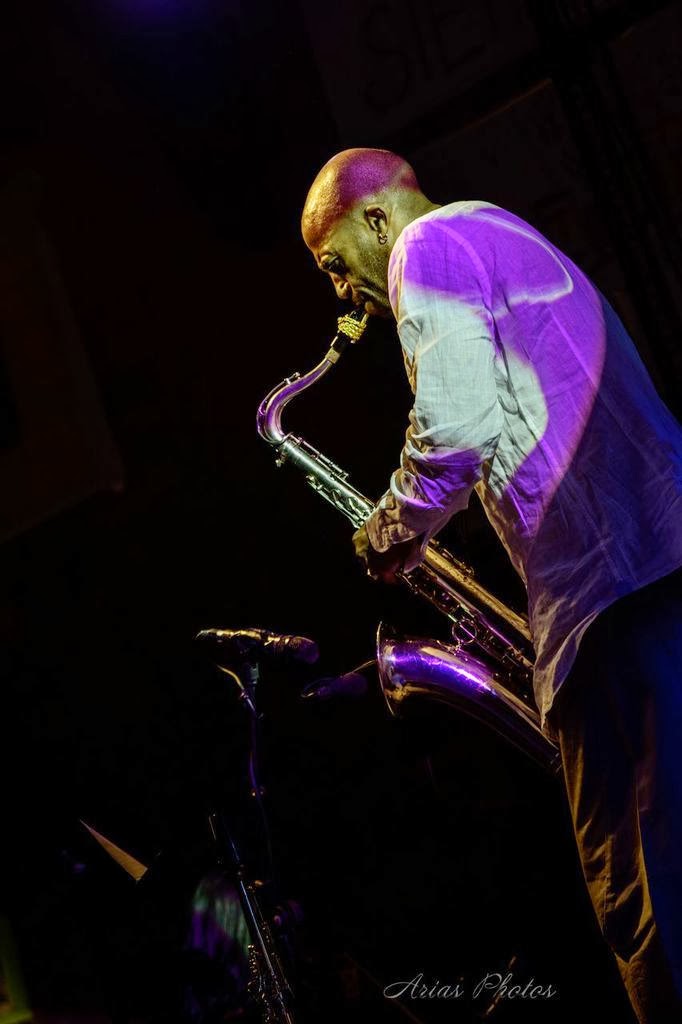
© Ariel Arias
ETBP: You have lived in Denmark and Spain. Tell us how you came to reside in these two countries, where you lived in each country, and how long you lived there.
NC: I moved to Denmark with a close friend, a trumpet player, who offered me the opportunity to play with the Danish Radio´s Orchestra and a Cuban-Spanish-Danish project called Son en Talla. I lived in Copenhagen for two years. Then I started playing and touring around the world with Cubanismo Orchestra and I moved to Granada Spain, where I lived for more than 15 years. I developed my own musical project and also formed and shared the leadership of a few different styles of musical projects, such as the Granada Blues Band, Four Runners with Dario Moreno, and Domestic Jazz Collective with DJ Toner, amongst others.
ETBP: What did you like and dislike about life in these countries?
NC: Each of the places where I lived offered me opportunities to play music, to collaborate with amazing musicians, and to meet many interesting people. As long as I can play, it means the environment around me is open to music and creativity, which means I am going to be happy. My life is my music so I can easily adapt anywhere and find sources of inspiration and energy every day.
In Denmark for instance, the local jazz scene is incredible and the local musicians are really excellent. A few weeks ago, I went to the “Maison du Denmark” in Paris for a jazz festival and it was a fantastic atmosphere and excellent music. I would love to collaborate again with Danish musicians. I have been very impressed by the lifestyle in Scandinavia—it is a very modern society in my view.
In my years in Spain I spent a lot of time traveling around the world touring with Cubanismo, Klimax and others. From Spain I really got a taste of the world from Thaiti (Tahiti) to Hong Kong, from Mexico to Montreal. I hate airports, because as you can imagine in today’s world traveling with a saxophone is a major challenge, but I love exploring as soon as I touch the ground.
ETBP: How does life in France compare to life in Denmark? In Spain?
NC: It is interesting to try to compare life in different countries. I think in the end of the day you are the same person anywhere you go and you bring in your suitcase your bad and your good habits. You miss things from a country but you compensate with something else you discover and start to like in another country. I probably kept habits that make me who I am in each one of these countries. I have been drinking liters of green tea in the morning anywhere in the world… For instance, my relationship to time is still very Spanish. I cannot have lunch before 2 or 3pm even in Paris, which can be complicated sometimes. I tell people we can meet in the afternoon and I mean 6 or 7pm which for them is early evening.
But to answer better on France, I should say there is so much I love here, starting with food and wine. I love cooking and going to the food market in France is incredible. I love the elegance in France, the sophistication. I am not a great fan of watching the news and keeping constantly up to date with the daily political and economical news. I think it helps me keeping my sanity. It is not that I do not care, but I feel I can have no impact. My only impact is to keep my energy to play well to make people happy in concerts and eventually help them change their mindset for a few hours.
ETBP: How often do you return to Cuba?
NC: Cuba is in my heart, and every time I play and share my music I bring people to Cuba. On the 7th of December I play in Geneva, Switzerland. They organized an entire day around Cuban culture and music and I am playing in the evening. Through a Cuban taste of cigars and rum, through images and sound, we will make people travel. Otherwise I still have my parents in Cuba and I miss them very much. I return as often as I can.

ETBP: Is there a Cuban community in Paris?
NC: Yes, there is a large Cuban community in Paris that started many years ago. I know that the Cuban migration to Paris started around the middle of the XIX century. You can see many Cuban bars and restaurants and there are many Cuban artists. For instance I work with an amazing Cuban photographer, Ariel Arias, who took the picture attached to this article. Ariel is a great friend but above all I have a lot of respect for his artistic work. His pictures reflect deep emotions and I think that you can almost hear my music when you see his pictures.
ETBP: If so, are there places that the community socializes regularly? Places where they eat?
NC: Personally I do not know of specific places where the Cuban community meets, but I know a few well known Cuban restaurants: La Havanita Café (rue de Lappe), Cubana Café (rue Vavin), Ile Changó (rue Fontaine au Roi).
ETBP: What is your favorite leisure activity?
NC: Listening to music is certainly at the heart of my life, when I walk in the street, in the metro, at home, everywhere!
I love going to movies and in Paris it is so easy and there are so many opportunities to just stop in a movie theater. I go to a great cine club called the Pop Corn Club. These people are great! They organize evenings with old movies on specific themes and they invite cinema experts to talk about the movies. But it is also a great social club where people share drinks, food and music at the end of the movie. Paris is amazing for that.
I also like to go to photography exhibitions. Recently I discovered a great gallery and art center called Le Bal near place de Clichy. I love places that mix art with food and drinks to create a real feeling of a community meeting there. Otherwise, as I said before, I love cooking for my friends.
ETBP: What is your favorite neighborhood in Paris?
NC: All Paris is my favorite, but one of the most interesting neighborhoods is the 18th arrondissement. I love the amazing diversity of cultures, peoples and art there. From the traditional Montmartre, to rue des Abbesses, all the way to rue des Martyrs, I love the cafés where you sit outside even in the winter. It is so Paris for me.
I can take walks for hours in Paris and never get bored. I always raise my eyes to look at a façade, or a window. I also like the more modern architecture like the green tube of the Austerlitz Fashion Museum—that place near the river is so cool. I also discovered the flea market in Saint-Ouen on a Sunday morning and thought the place was absolutely unique.
In the end when you get to know Paris well, you discover that it is a collection of villages with their own identity and style. That is what makes Paris so rich.
ETBP: What advice would you give to someone who is thinking of moving to Paris?
NC: Don´t think about it, just do it!!
It is a very challenging environment, especially in arts, because a lot of very talented artists live here. But it gives you energy to show what you can do. Especially in jazz…
Paris has been historically a major hub for jazz musicians. Many of them, starting with Miles Davis, fell in love with Paris and were always sad to leave. Maybe it is the romantic side of Paris, which I know is not the only reality. But Paris touches you deeply and makes you feel you need that special atmosphere that cannot be compared. Even if I love New York and its energy and London and its free creative vibes, Paris has something maybe close to melancholy that makes it special, at least for me. Paris is very jazzy.
A last point I want to make is that in Paris I met amazingly innovative people who are supporting music in a new way. For instance, I became recently a Bandsquare artist. Bandsquare is a crowd funding platform that supports musicians to play live music. We know crowd funding as a means to finance recording of CDs, but Bandsquare is about live music. It’s totally new. The platform was launched in October 2013 by Chloe, a young brilliant entrepreneur who deserves a lot of credit.
As you can see France has a big potential for innovation in the culture market and I want to be part of it!

© Discover Paris!
Nardy will perform on December 17, 2013 at 9:30 PM at:
Le Petit Journal Montparnasse
13 rue du Commandant Mouchotte
75014 PARIS
Telephone: 01 43 21 56 70
E-mail: infos@petitjournalmontparnasse.com
Dinner and concert: 60 euros
Concert plus one drink: 20 euros
For Part 1 of Nardy's Black Paris Profile, click here.
Entrée to Black Paris!™ is a Discover Paris! blog.
If you like this posting, share it with your friends by using one of the social media links below!


