Last week, I introduced you to Christian Bordey, portrait photographer. In the second part of my interview with him, Christian discusses his favorite photography project and his life in the City of Light.
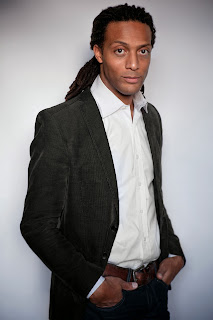
Christian Bordey
© Cécile Renaud
Though he lives and works in Paris, Christian feels more at home in Guadeloupe and more widely in countries with a black majority population. There are several reasons for this: he cites culture first and foremost, then “way of life” and “sense of fun.” “It's a bit cliché,” he says, but the sun is also an important reason that he prefers Guadeloupe. He describes himself as a “photo addict” and because he prefers images with bright sun and blue sky, he can take pictures all the time there. Also, he still has family in Guadeloupe and wants to spend more time with them.
He began to take pictures of his home island Terre-de-Bas in October 2012. Not having visited there for six years, the trip was like a rediscovery for him. Because there are few distractions on the island, he took photos to combat boredom. Then he came up with the idea of creating a book of these photos to show to his mother. He is working on photo books for two additional Guadeloupian islands – Marie-Galante and La Désirade – at the suggestion of Los Angeles gallery owner Michelle Joan Papillion.
At present, the "Terre de Bas" book is Christian’s preferred project. This is because it is intensely personal. He calls Terre de Bas his holiday paradise because this is where his mother comes from and where he spent all his holidays as a child. During his last stay in Guadeloupe, his brother introduced him to the neighborhood where his father grew up. Because he grew up without his father, he plans to focus his lens on this area in future photo shoots.

The Way to the Beach
© Christian Bordey
Photography has taken Christian many places in the world. When he was a photo assistant – taking care of equipment lists and managing the lighting for photography sessions – he traveled Spain, England and Italy for magazines such as Madame Figaro, Elle, and Vanity Fair. For photo shoots for English catalogs, he traveled to Brazil, California, and some islands in the Anglophone Caribbean (Bahamas, Barbados). He prefers sunny locations (especially Guadeloupe) and is now thinking of traveling to take pictures on the African continent.
One of the most unusual shoots that Christian worked on was in Qatar. He went there with Maher Attar, a Lebanese photographer based in Paris who works for the royal family. At the time, Christian was Attar’s light assistant. They took photos of the king's daughter and the images were printed on porcelain and offered to guests. During his free time, he took the opportunity to show another side of life in Qatar, the harsh reality of immigrants working on construction sites in stifling heat.
When the conversation turned to life in France, Christian had lots to say. He moved to Paris with his mother when he was three years old. Some of his most vivid memories of his early days there were of going to the discount clothing store Tati. He recalls that the store was often full and because he was small, it impressed him “a lot.” He also remembers that people from all backgrounds frequented Tati in those days, and he commented that this has not changed.
He currently lives in the Paris suburb of Asnières-sur-Seine and he likes his neighborhood because it is close to all the conveniences of everyday life and provides a neighborhood life of its own. It is the first place that he lived when he arrived in France and he says that it “is a bit of a nod to my story.”
His favorite area in Paris is Châtelet les Halles because of the shopping, recreational activities such as cinema, and the huge mix of people that you find in the quarter because of the efflux from the suburbs at Châtelet Les Halles RER station. Only a few meters away, you can find a more “bobo” atmosphere with rue Montorgueil and trendy restaurants and cafés.
Christian rides a scooter – a popular means of transportation in Paris. He likes this because it gives him a sense of freedom and saves him time. But he doesn’t shun other ways of getting around. When he worked at Studio Astre, he took the metro to work because it was the most direct way to get from his home to the studio. He prefers taking a car when going long distances, particularly when the sun goes down.
When asked about the Guadeloupian community in Paris, Christian said that because of the history between France and the Caribbean and because Guadeloupe is still French, “forty years of immigration and homecoming are still valid.” Among the places that he meets people in the community is in the hair salon, “a place of passage of the black community.” He says that jazz clubs provide a very active scene for Caribbean. Occasionally, he’ll eat at La Kaz, a casual restaurant near Châtelet that serves Caribbean specialties.
Christian has the following advice for young photographers who are considering moving to Paris and establish a career there:

Fogo de Deus
© Christian Bordey
************

If you like this posting, share it with your friends by using one of the social media links below!

© Cécile Renaud
Though he lives and works in Paris, Christian feels more at home in Guadeloupe and more widely in countries with a black majority population. There are several reasons for this: he cites culture first and foremost, then “way of life” and “sense of fun.” “It's a bit cliché,” he says, but the sun is also an important reason that he prefers Guadeloupe. He describes himself as a “photo addict” and because he prefers images with bright sun and blue sky, he can take pictures all the time there. Also, he still has family in Guadeloupe and wants to spend more time with them.
He began to take pictures of his home island Terre-de-Bas in October 2012. Not having visited there for six years, the trip was like a rediscovery for him. Because there are few distractions on the island, he took photos to combat boredom. Then he came up with the idea of creating a book of these photos to show to his mother. He is working on photo books for two additional Guadeloupian islands – Marie-Galante and La Désirade – at the suggestion of Los Angeles gallery owner Michelle Joan Papillion.
At present, the "Terre de Bas" book is Christian’s preferred project. This is because it is intensely personal. He calls Terre de Bas his holiday paradise because this is where his mother comes from and where he spent all his holidays as a child. During his last stay in Guadeloupe, his brother introduced him to the neighborhood where his father grew up. Because he grew up without his father, he plans to focus his lens on this area in future photo shoots.

© Christian Bordey
Photography has taken Christian many places in the world. When he was a photo assistant – taking care of equipment lists and managing the lighting for photography sessions – he traveled Spain, England and Italy for magazines such as Madame Figaro, Elle, and Vanity Fair. For photo shoots for English catalogs, he traveled to Brazil, California, and some islands in the Anglophone Caribbean (Bahamas, Barbados). He prefers sunny locations (especially Guadeloupe) and is now thinking of traveling to take pictures on the African continent.
One of the most unusual shoots that Christian worked on was in Qatar. He went there with Maher Attar, a Lebanese photographer based in Paris who works for the royal family. At the time, Christian was Attar’s light assistant. They took photos of the king's daughter and the images were printed on porcelain and offered to guests. During his free time, he took the opportunity to show another side of life in Qatar, the harsh reality of immigrants working on construction sites in stifling heat.
When the conversation turned to life in France, Christian had lots to say. He moved to Paris with his mother when he was three years old. Some of his most vivid memories of his early days there were of going to the discount clothing store Tati. He recalls that the store was often full and because he was small, it impressed him “a lot.” He also remembers that people from all backgrounds frequented Tati in those days, and he commented that this has not changed.
He currently lives in the Paris suburb of Asnières-sur-Seine and he likes his neighborhood because it is close to all the conveniences of everyday life and provides a neighborhood life of its own. It is the first place that he lived when he arrived in France and he says that it “is a bit of a nod to my story.”
His favorite area in Paris is Châtelet les Halles because of the shopping, recreational activities such as cinema, and the huge mix of people that you find in the quarter because of the efflux from the suburbs at Châtelet Les Halles RER station. Only a few meters away, you can find a more “bobo” atmosphere with rue Montorgueil and trendy restaurants and cafés.
Christian rides a scooter – a popular means of transportation in Paris. He likes this because it gives him a sense of freedom and saves him time. But he doesn’t shun other ways of getting around. When he worked at Studio Astre, he took the metro to work because it was the most direct way to get from his home to the studio. He prefers taking a car when going long distances, particularly when the sun goes down.
When asked about the Guadeloupian community in Paris, Christian said that because of the history between France and the Caribbean and because Guadeloupe is still French, “forty years of immigration and homecoming are still valid.” Among the places that he meets people in the community is in the hair salon, “a place of passage of the black community.” He says that jazz clubs provide a very active scene for Caribbean. Occasionally, he’ll eat at La Kaz, a casual restaurant near Châtelet that serves Caribbean specialties.
Christian has the following advice for young photographers who are considering moving to Paris and establish a career there:
The best advice is quite simple: work, patience, and above all, perseverance. And maximize your social connections – get out and be seen in the right places.

© Christian Bordey
Entrée to Black Paris!™ is a Discover Paris! blog.
If you like this posting, share it with your friends by using one of the social media links below!


