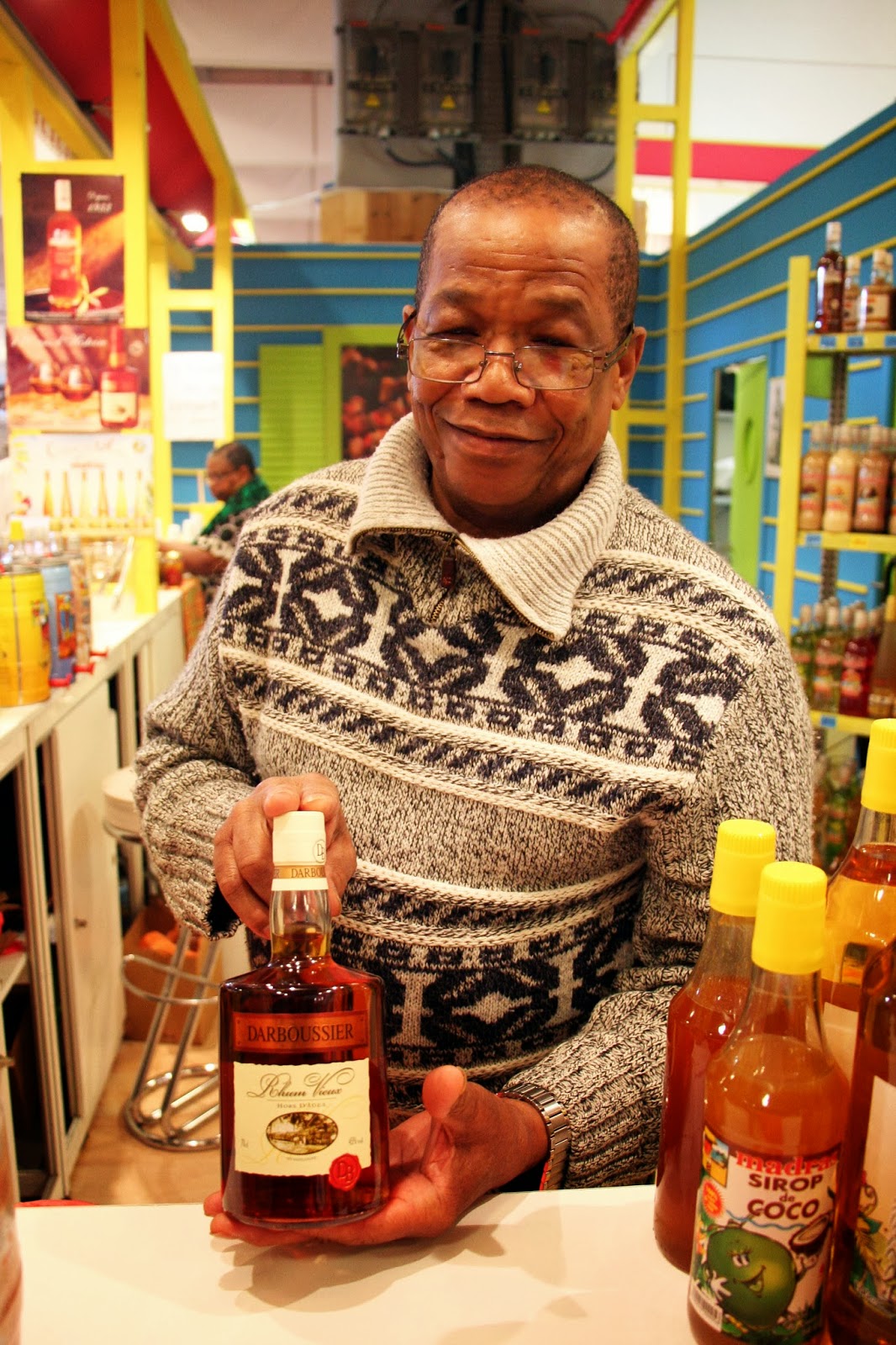
The Comité Martiniquais de Tourisme (Martinique Tourism Committee) and the restaurant chain Chez Clément are hosting the first celebration of Martinican cuisine in Paris! From February 7 through March 1, 2015, the French dining public will find a Martinican menu at each of the restaurant’s seven locations in the French capital.
My partner and I recently dined at Chez Clément in Montparnasse. This establishment is located along the stretch of sidewalk that extends between two of the quartier’s most famous café-restaurants – Le Dôme and La Coupole. A banner above the entryway announces the 20-year anniversary of the chain.

Chez Clément Montparnasse
© Discover Paris!
A display consisting of a basket of limes, bananas, and oranges; several bottles of Clément rum; and dried slices of citrus fruits arranged on a large madras cloth dominated the bar and commanded our attention upon entry.

Martinique Gourmande display
© Discover Paris!
A waitress greeted us and issued us into one of the dining rooms adjacent to the sidewalk. There we were able to watch passersby while we savored our meal. And savor it, we did!
The Martinican menu consists of Ti’ Punch (white rum, lime, and cane syrup), a platter of accras de morue (cod fritters) and miniature boudins noirs (blood sausage) to share, Colombo de poulet (chicken stewed with curry and coconut milk), and flan de coco (flan with grated coconut). My partner and I elected to order everything on the menu.

Martinique Gourmande menu
© Discover Paris!
Our waitress placed a small basket of bread on the table after she took our drink order. The thick slices of baguette had a slightly yellowish crumb with small alveoli. The crust was golden brown but not especially crispy. The bread was fresh and quite good.
A man emerged from the kitchen with our ti’ punch, which was served in big rounded tumblers bearing the Clément rum label. Though traditionally served without ice, our server had taken the liberty of adding a single ice cube to each glass. As he set them before us, he hastened to explain that he had done so because the cocktail had not been previously chilled. He brought the bottle of rum over to our table to show us that it was 40° rhum agricole made by the centuries-old rum producer, Clément. (Although the name is the same, there is no relationship between the manufacturer of the rum and the restaurant chain.)

Ti' Punch with Clément rum
© Discover Paris!
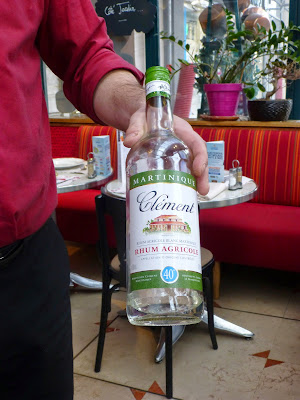
The main ingredient
© Discover Paris!
A few minutes later, the same server came to the table bearing a wooden chopping board covered with crispy fresh accras de morue, mini boudins noirs, wedges of avocado and lime, chile peppers, lightly dressed lettuce, warm plantain chips, and a mildly spicy, salsa-type tomato sauce. We devoured these as we coaxed the last drops of our ti’ punch out of our glasses. While not peppery hot, the boudin was wonderfully perfumed. I increased the piquancy to the level I desired by pairing each boudin with some of the chile pepper that had been served alongside.

Accras and boudin noir
© Discover Paris!
Then our main dish arrived. Each of us received a plate of rice sprinkled with chopped chives, three thick morsels of cooked plantain, and an entire cooked cherry tomato. But where was the chicken?

Rice and plantains
© Discover Paris!
Once again, our server hastened to assure us that we were not to worry – he hadn’t finished serving us. He returned to the table moments later bearing cast iron crock pots containing chicken and sauce for each of us. Cautioning us that the pots were extremely hot, he removed the lids, releasing tantalizing aromas of curry and coconut milk.

Colombo de poulet
© Discover Paris!
My partner and I ordered another round of ti’ punch to accompany this course.
We tucked in, serving ourselves morsels of chicken from the pot (still on the bone) and ladling sauce over the rice and fowl. In general, I never finish the rice that I’m served in restaurants because I find it too filling, but on this day the sauce that accompanied this dish was so good that I ate every single grain and used the wonderful bread we were served to absorb every last drop of sauce in my crock pot.
Like the boudin noir, this dish lacked the spiciness that comes from using fresh chiles or chile powder in the preparation. But in my opinion, it was perfect in every other way.
The flan de coco provided a fairly light and satisfying finish for our meal. It was basically a crème caramel dusted with shredded coconut. Because I had eaten all of my rice, I couldn’t finish my portion, so my partner happily took it upon himself to eat it.

Flan de coco
© Discover Paris!
Our server brought my partner an espresso and placed two digestif glasses and two squares of chocolate in front of us. He then brought over the bottle of the amber Clément rum that we had seen displayed on the bar when we entered the restaurant. The complimentary after-dinner drink was a lovely surprise to top off an excellent meal!

Aged Clément rum
© Discover Paris!

Our after-dinner drinks
© Discover Paris!
The entire meal – one platter of accras and boudin, two chicken dishes, two desserts, and four ti’ punches – came to only 81.90€
Diners who want a gentle introduction to the flavors of Martinican cuisine should waste no time in getting over to Chez Clément before the end of the week!
Chez Clément
106 boulevard du Montparnasse
75014 Paris
Tel. : 01.44.10.54.00
Metro : Vavin (Line 4)
Open 7 days a week
************

If you like this posting, share it with your friends by using one of the social media links below!
My partner and I recently dined at Chez Clément in Montparnasse. This establishment is located along the stretch of sidewalk that extends between two of the quartier’s most famous café-restaurants – Le Dôme and La Coupole. A banner above the entryway announces the 20-year anniversary of the chain.

© Discover Paris!
A display consisting of a basket of limes, bananas, and oranges; several bottles of Clément rum; and dried slices of citrus fruits arranged on a large madras cloth dominated the bar and commanded our attention upon entry.

© Discover Paris!
A waitress greeted us and issued us into one of the dining rooms adjacent to the sidewalk. There we were able to watch passersby while we savored our meal. And savor it, we did!
The Martinican menu consists of Ti’ Punch (white rum, lime, and cane syrup), a platter of accras de morue (cod fritters) and miniature boudins noirs (blood sausage) to share, Colombo de poulet (chicken stewed with curry and coconut milk), and flan de coco (flan with grated coconut). My partner and I elected to order everything on the menu.

© Discover Paris!
Our waitress placed a small basket of bread on the table after she took our drink order. The thick slices of baguette had a slightly yellowish crumb with small alveoli. The crust was golden brown but not especially crispy. The bread was fresh and quite good.
A man emerged from the kitchen with our ti’ punch, which was served in big rounded tumblers bearing the Clément rum label. Though traditionally served without ice, our server had taken the liberty of adding a single ice cube to each glass. As he set them before us, he hastened to explain that he had done so because the cocktail had not been previously chilled. He brought the bottle of rum over to our table to show us that it was 40° rhum agricole made by the centuries-old rum producer, Clément. (Although the name is the same, there is no relationship between the manufacturer of the rum and the restaurant chain.)

© Discover Paris!

© Discover Paris!
A few minutes later, the same server came to the table bearing a wooden chopping board covered with crispy fresh accras de morue, mini boudins noirs, wedges of avocado and lime, chile peppers, lightly dressed lettuce, warm plantain chips, and a mildly spicy, salsa-type tomato sauce. We devoured these as we coaxed the last drops of our ti’ punch out of our glasses. While not peppery hot, the boudin was wonderfully perfumed. I increased the piquancy to the level I desired by pairing each boudin with some of the chile pepper that had been served alongside.

© Discover Paris!
Then our main dish arrived. Each of us received a plate of rice sprinkled with chopped chives, three thick morsels of cooked plantain, and an entire cooked cherry tomato. But where was the chicken?

© Discover Paris!
Once again, our server hastened to assure us that we were not to worry – he hadn’t finished serving us. He returned to the table moments later bearing cast iron crock pots containing chicken and sauce for each of us. Cautioning us that the pots were extremely hot, he removed the lids, releasing tantalizing aromas of curry and coconut milk.

© Discover Paris!
My partner and I ordered another round of ti’ punch to accompany this course.
We tucked in, serving ourselves morsels of chicken from the pot (still on the bone) and ladling sauce over the rice and fowl. In general, I never finish the rice that I’m served in restaurants because I find it too filling, but on this day the sauce that accompanied this dish was so good that I ate every single grain and used the wonderful bread we were served to absorb every last drop of sauce in my crock pot.
Like the boudin noir, this dish lacked the spiciness that comes from using fresh chiles or chile powder in the preparation. But in my opinion, it was perfect in every other way.
The flan de coco provided a fairly light and satisfying finish for our meal. It was basically a crème caramel dusted with shredded coconut. Because I had eaten all of my rice, I couldn’t finish my portion, so my partner happily took it upon himself to eat it.

© Discover Paris!
Our server brought my partner an espresso and placed two digestif glasses and two squares of chocolate in front of us. He then brought over the bottle of the amber Clément rum that we had seen displayed on the bar when we entered the restaurant. The complimentary after-dinner drink was a lovely surprise to top off an excellent meal!

© Discover Paris!

© Discover Paris!
The entire meal – one platter of accras and boudin, two chicken dishes, two desserts, and four ti’ punches – came to only 81.90€
Diners who want a gentle introduction to the flavors of Martinican cuisine should waste no time in getting over to Chez Clément before the end of the week!
Chez Clément
106 boulevard du Montparnasse
75014 Paris
Tel. : 01.44.10.54.00
Metro : Vavin (Line 4)
Open 7 days a week
Entrée to Black Paris!™ is a Discover Paris! blog.
If you like this posting, share it with your friends by using one of the social media links below!